
I haven’t quite caught the “chair bug” yet, but the more I venture into chairmaking—Windsor and stick chairs in particular—the more intrigued I become. For woodworkers, such as myself, with a background almost exclusively in casework type furniture, chairmaking can seem like an entirely different discipline. Proficiency using hand tools is a transferable skill, but it seems like that’s about it.
I may be a poor conduit for this message given my relative lack of experience, but if you’re on the fence I highly suggest taking the plunge. Even if you never build a chair, I believe the added perspective will make you a better woodworker. If you only have time for one thing, I would watch Peter Galbert’s presentation to the Sterling Historical Society.
For those with a little more time who aren’t willing to make a monetary commitment just yet, Peter Galbert’s old Chair Notes blog is a treasure trove of information and Curtis Buchanan posted a series of videos on YouTube. If you have a little money to spare, Peter’s current iteration of Chair Notes is partially paywalled and he’s published a book, the Chairmaker’s Notebook, through Lost Art Press. You also can’t go wrong with Chris Schwartz’s The Stick Chair Book, which is available for free in PDF form but I would suggest buying the physical book1.
The first step in any project is acquiring the materials and that first step is also where we veer off course from a normal project. While you can use sawn kiln dried lumber, there are a myriad of advantages to using air dried lumber and splitting the smaller parts from a log. This isn’t an exhaustive list, but the main advantages are:
- greater strength of split parts
- the ability to control the relative moisture content of the pieces
- ease of working green lumber with hand tools
- easier to bend and less likely to snap while stream bending
I was able to find a local sawyer who sold me a few boards and a log from the same tree for a reasonable price. The log is obviously from the base of the tree, which is not ideal but shouldn’t impact me too much2.
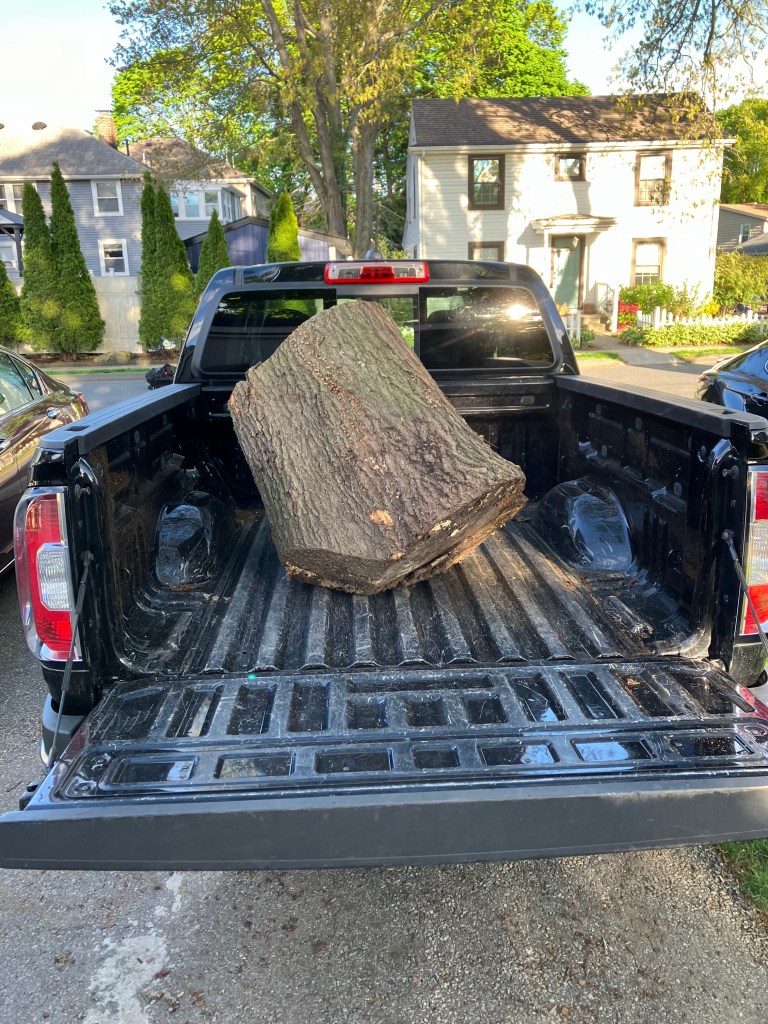

I couldn’t contain my excitement, so I split up the log right when I got home. As I’ve since learned, this was a mistake. Freshly split lumber works beautifully with a drawknife, so I hear, but the wood doesn’t maintain that characteristic for long. I missed the window so my drawknife will have to remain on the wall for now. Again, not ideal but not that big of a deal. The grain still runs straight through the split parts. They’ll be harder to work to a finished shape but just as strong.
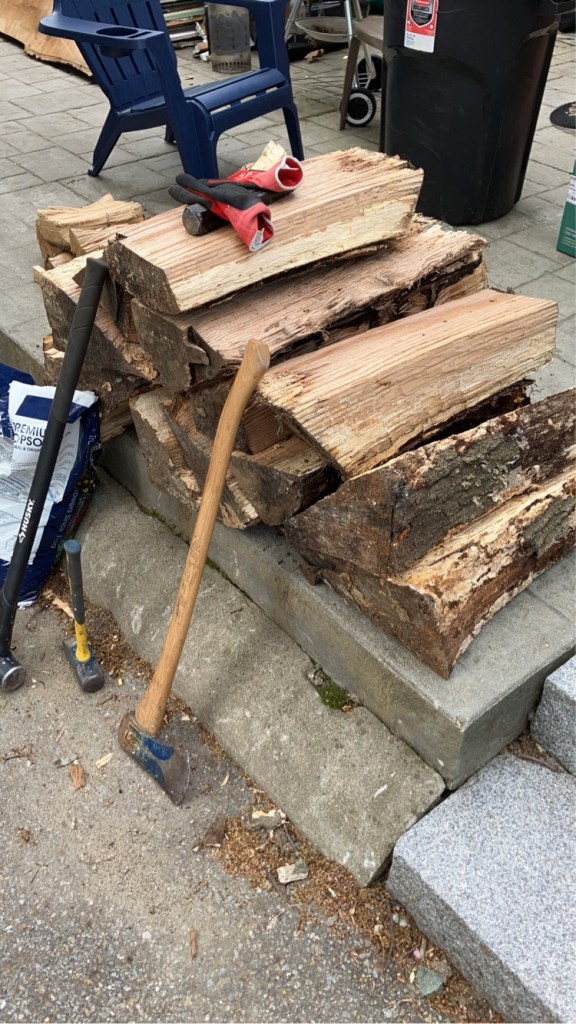
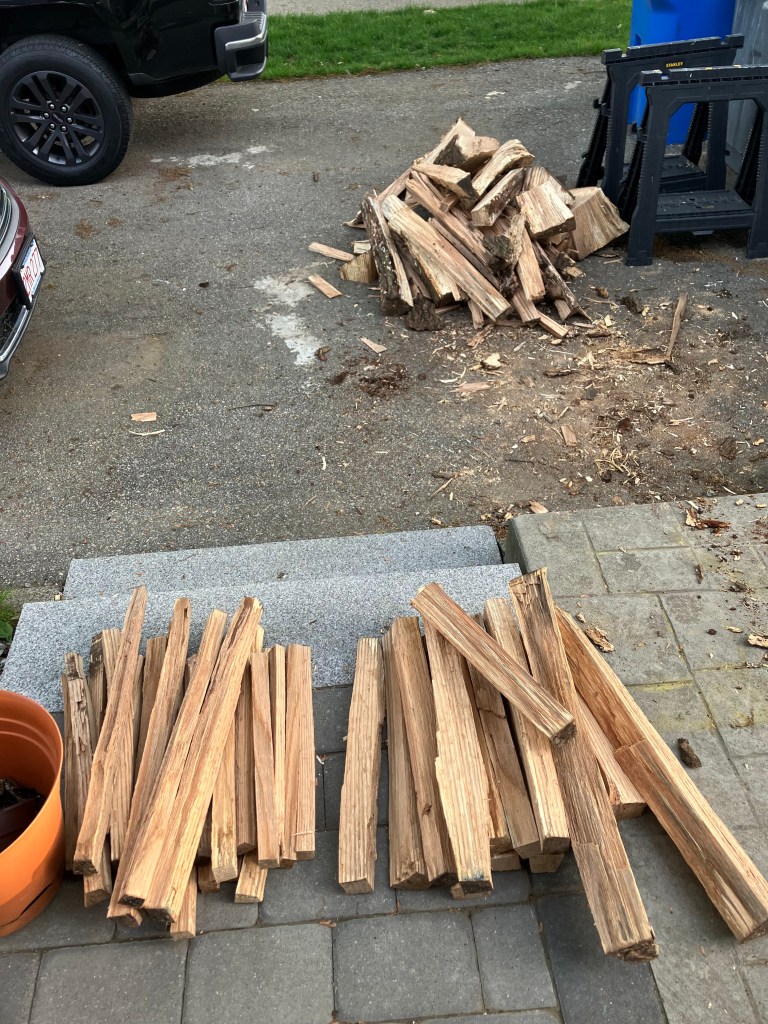
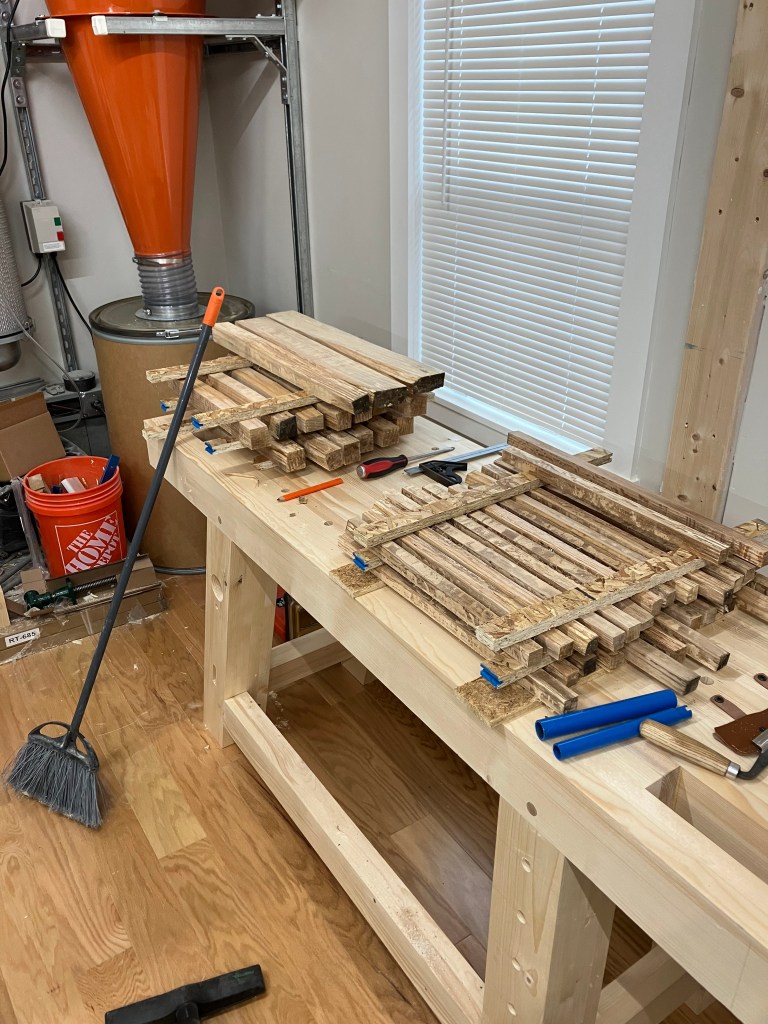
My plan is to build at least one of Chris Schwartz’s Irish Stick Chairs. I’m confident that I have enough stock for one but if I don’t make any major mistakes, I think I can squeeze out two. I’m also going to build a few stools to get the hang of the leg to seat joinery. I usually work on multiple projects at once (I can’t help it) so I’ll probably work on these chairs in fits and starts. Usually there is some overlap between the projects I’m working on so I’m interested to see how this foray into green woodworking will influence my other work.
- Not only should we support publishers of high quality woodworking books if we’re able to, but frequently pulling up a large PDF on your phone to reference is incredibly inconvenient. ↩︎
- For the Irish Stick Chair I won’t need many sticks and they’re all on the shorter side so I don’t need much yield from the log. ↩︎
 Welcome to the Workshop
Leave a comment