
It’s time to wrap up the perch. Once the glue had set, I finished shaping the seat using a travisher and spokeshave, then smoothed everything out with a card scraper. It’s been years since I’ve worked with a properly tuned card scraper, and I had forgotten just how enjoyable they are to use. I also wanted to share the jig I’ve been using on to hold stools after assembly. I originally threw it together while building my first creepie to plane the seat post-assembly, but it’s become far more useful than I ever expected. For the perch, it worked especially well—the legs wedged perfectly between the jig’s arms, holding it securely in place while I worked on the top. The soft pine arms hardly left a mark on the maple legs.


This version of the jig is still destined for the scrap pile, but it might serve as inspiration for a future, improved design. The current iteration was specifically made with the creepie in mind, and it was just by chance that it worked so well with the perch. I’m not sure how well it would work with a larger seat for a full-sized chair or one with four legs but, ideally, the arms would be adjustable to accommodate a wider variety of chairs. If I do end up refining the design, I’ll be sure to share the process in a future post.
Moving on to the finish, I decided to paint the seat and leave the legs natural. I liked the idea of the contrast between the two, and painting the legs seemed like it would be a pain. Catalpa is a ring-porous wood, so I needed to fill the grain before painting. I used Timbermate, which is a fantastic all-around wood filler. While the package didn’t include instructions for using it as a grain filler, I found them online here. The instructions are for a much larger application. All I did was put a little filler into a plastic cup and slowly mix in water with a pair of disposable chopsticks. Since I didn’t have a flexible putty knife on hand, I used an old credit card to apply it to the seat. The picture below on the left shows the seat after I had sanded off the excess.
To paint the seat I used General Finishes Milk Paint in Queenstown Gray. Despite the name, it’s not a true milk paint but a modern product designed to mimic traditional milk paint. I haven’t worked with traditional milk paint before, but I was really impressed with the General Finishes product. The coverage was excellent, it was ready to sand and re-coat in two hours, and the color is beautiful. Although I haven’t painted much furniture in the past, painting chairs is pretty common, so I expect to do it more going forward. General Finishes recommends spraying the Milk Paint for best results, and if I paint a whole chair in the future, I’ll definitely break out the spray gun and give that a try.


I went back and forth between using a water-based or oil-based topcoat. A water-based finish would have preserved the light, milky look of the maple legs, while the oil-based topcoat, which I ultimately chose, adds a yellow hue to the wood. The pictures below show the chair before and after applying the topcoat1. I’m still not 100% sure which look I prefer but I think I would have been happy with the result either way. The topcoat is three coats of General Finishes Arm-R-Seal. I let the final coat cure for a week before rubbing it out with a brown paper bag. This removes any minor imperfections in the finish without leaving scratches.
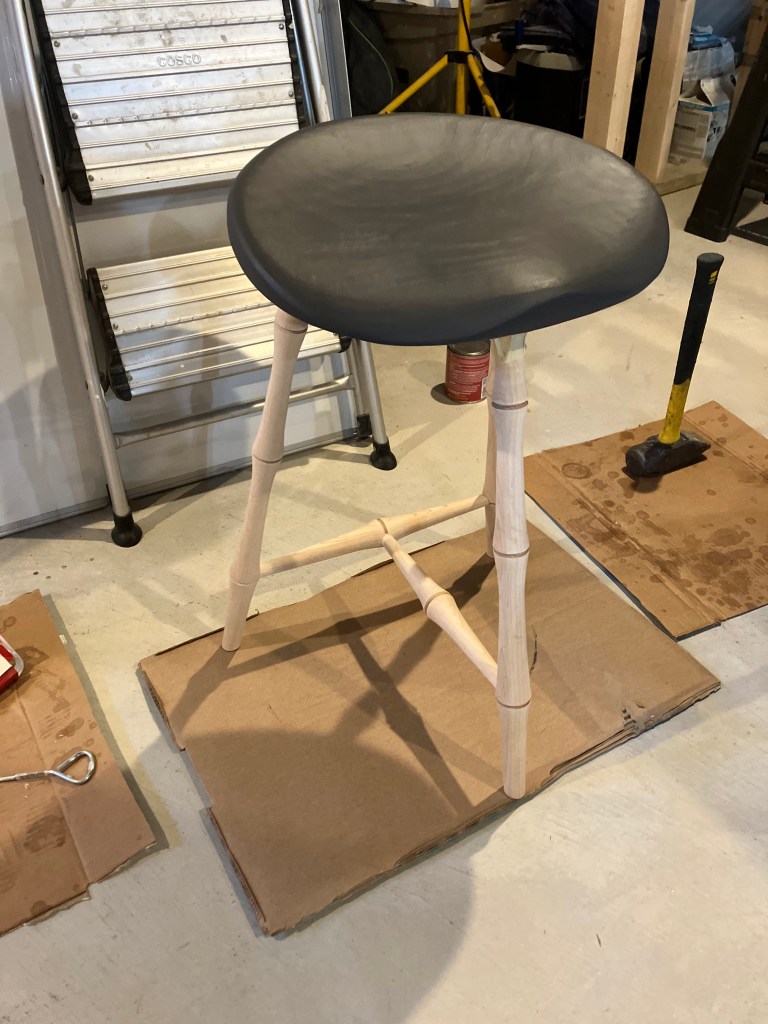

In the end, I’m really happy with how the perch turned out. It was a quick, enjoyable build, and it’s very comfortable to sit on. Time will tell how well it works as a computer chair, but I’m optimistic. I’m feeling much more confident in my turning and seat-shaping skills, which was the main goal of this project. Once I find the motivation to sharpen the scorp and travisher, I think I’ll be ready to dive right into the Irish Stick Chair.
- I used a satin topcoat which noticeably altered the sheen of the milk paint. There are water-based topcoats available in a flat sheen, which I don’t believe I’ve seen for oil-based. A flat topcoat may have preserved the flat look of the milk paint. ↩︎
 Welcome to the Workshop
Leave a comment