
I recently broke out my new VEVOR Inflatable Paint Booth for the first time. My neighbor said it looked like the tent that the government set up in front of the house in the movie E.T. Just to clear things up, I am not harboring any stranded aliens. I’m just spray finishing furniture.
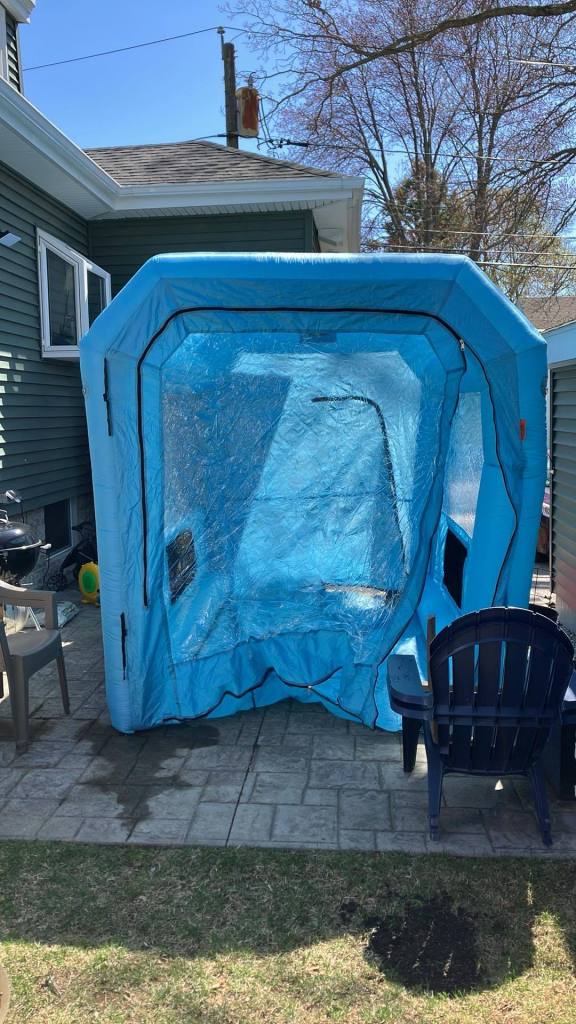
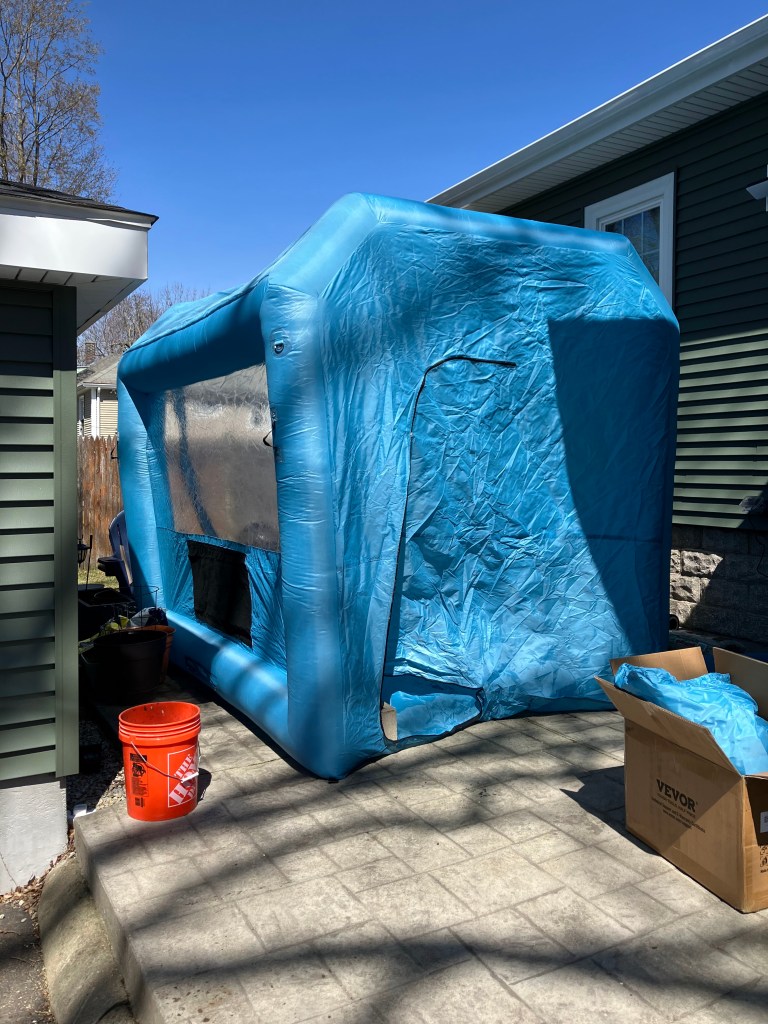
My mentor was a genius when it came to finishing, so I know a lot more about the topic than I really have any business knowing. I’d spray more often if I had a dedicated, climate-controlled booth, but I don’t and the weather doesn’t exactly cooperate in the Northeast for much of the year. The problem is compounded by the fact that I spray primarily water-based finishes, which are more sensitive to cold temperatures.
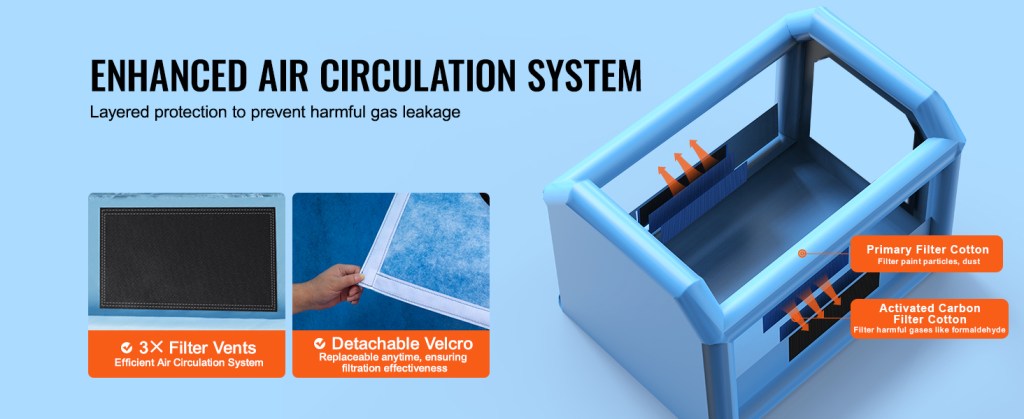
So far, I am a big fan of the inflatable spray booth. The big benefit, aside from being enclosed to keep contaminants out, is the built-in ventilation system. The booth is inflated by a blower (the same kind that’s used for bouncy houses), and the air exhausts into the booth, creating airflow and pushing overspray out through filters in the side wall. I was skeptical at first, but it works surprisingly well, and the blower isn’t nearly as loud as I feared. The only thing I can’t attest to is longevity. It seems inevitable that I’ll put a hole in it at some point but hopefully I can patch it.
My first use case was finishing an oak tabletop that I built to sit atop a storage cabinet in our kitchen. I wanted a durable film finish that would cure quickly so I could put it into service with minimal delay1. I went with Target Coatings EM8000cv, a water-based conversion varnish. The manufacturer claims it “matches the rich color tones and high durability associated with solvent and oil based coatings.”
A common complaint with water-based finishes is that they don’t “enhance” the wood in the same way that solvent based finishes do. I’m not going to compare one to the other, but the EM8000cv did add a yellow hue that helped the top blend in nicely with the rest of the oak in the house.
Before spraying, I filled the pores. While you don’t always have to2, I’m not a fan of using film finishes on open-pored woods without grain fill. This was my first time using Aqua Coat, which is a clear grain filler, and it worked exactly as described. I’ll probably start using it a lot more going forward.

To spray the EM8000cv, I used my Fuji Spray Semi-PRO 2 with a 1.5mm air cap. It’s not a particularly powerful turbine, but I’ve never had trouble achieving sufficient atomization with any of the water-based products I’ve used. EM8000cv is formulated for spraying, and I didn’t have to thin it at all. Around the same time, I also sprayed General Finishes Milk Paint for the mini Lowback Stick Chair, using a 1.8mm air cap and thinning to the manufacturer’s spec, with no issues.
One note of caution if you’re new to water based finishes: you can only thin them minimally, and it’s important to follow the manufacturer’s instructions.
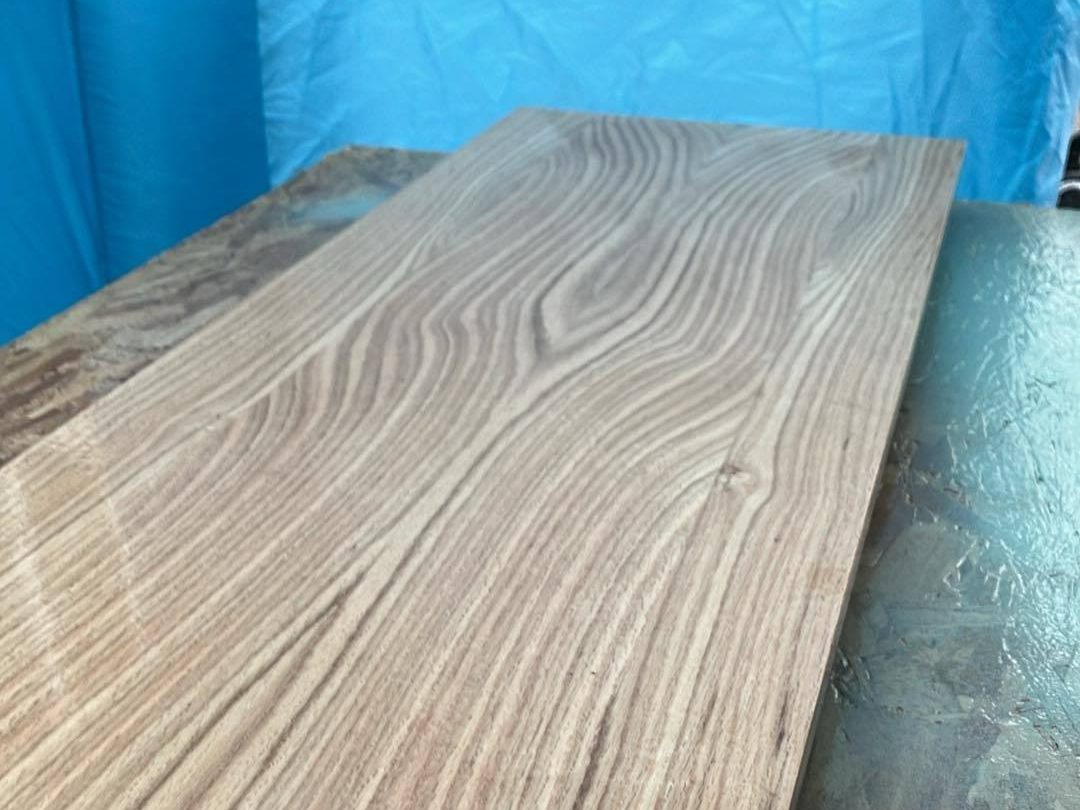
What you’re looking for is a “wet” look off of the gun. The picture above is the best I have, but it doesn’t really capture it. The surface may have a slight orange peal look at first, but it should flow out to a smooth finish. It takes about 40 minutes to an hour to dry, and I sanded lightly in between coats. I sprayed one coat of gloss and two of satin. If you’re confident that you’ll get a smooth finish off the gun you only need one coat at the final sheen. I’ve always been told not to apply more than two coats with flatteners, as it can cause the finish to look cloudy.
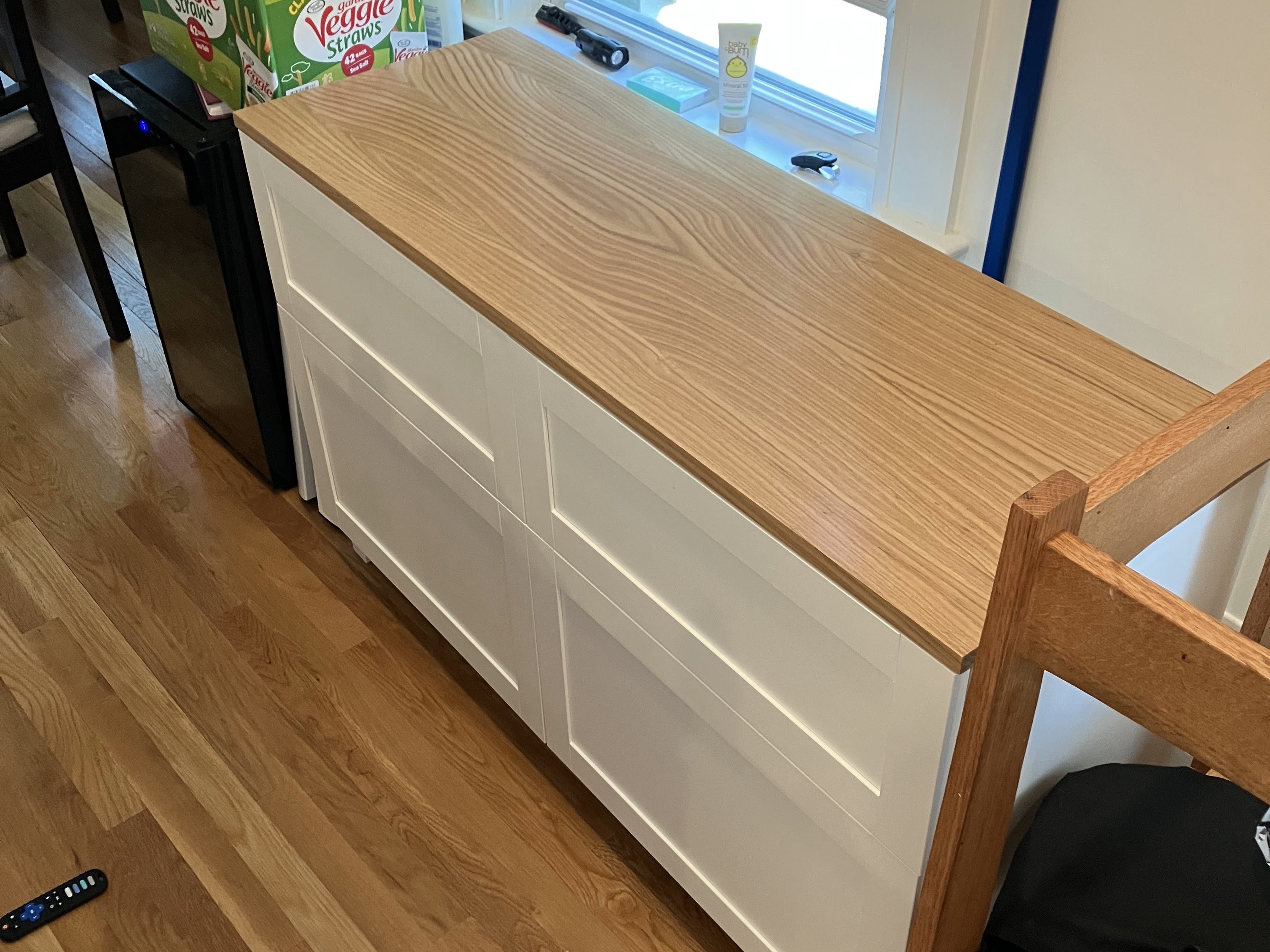
I gave the surface five days to cure, as recommended by the manufacturer, before lightly wet sanding with 1500-grit sandpaper. I use a grit that’s a step above the final sheen, but if your final coats contain flatteners, you don’t have to worry too much about altering the sheen. Wet sanding isn’t necessary if your finish is already smooth, but I like to do it for flat surfaces that are going to get touched a lot, because it takes the feel from smooth to glass. Outside of a professional setting, I think that it’s unlikely you’ll get a totally contaminant-free finish. I find it easier to polish the surface after it’s cured, rather than to chase perfection during application.
The finished product looks right at home. It was great to spray again, and hopefully the weekend weather cooperates this summer so I can do more of it. If you’re from the Northeast, you know that hasn’t been the case in recent years. Fingers crossed 🤞
- Don’t ask my wife how long I had to wait for nice enough weather to spray. Spoiler, it was longer than it would have taken a wiping varnish to cure. ↩︎
- If you’re unsure, always check with the manufacturer. My recollection was that some film finishes shouldn’t be used on open pored woods without filling them first but I don’t have any sources for that. ↩︎
 Welcome to the Workshop
Leave a comment